
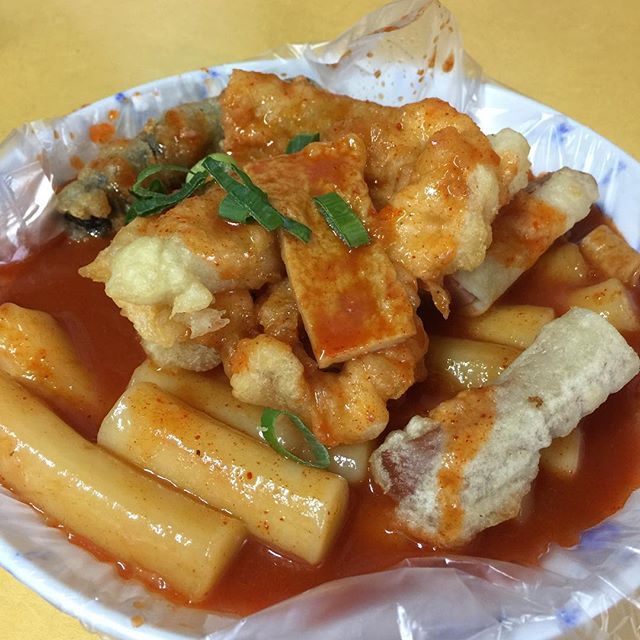
Jamwon Tteokbokki: The 40-Year-Old Street Cart in Gangnam That Survived the City
A Gangnam You Won’t See on the Tourist Map
When most people think of Gangnam, they picture gleaming skyscrapers, luxury boutiques, and K-pop entertainment buildings. But tucked inside a quiet villa alley near Jamwon Station, just minutes from all of that, is a tteokbokki cart that has been feeding locals since the 1980s — long before Gangnam became the symbol of Korean cool.
Jamwon Tteokbokki isn’t a restaurant. It’s not a café. It’s a pojangmacha-style street stall — narrow, low, under an old wooden plank roof with a bare dirt floor — that looks like it was pulled straight out of a Korean drama set in the 1980s. Because in a way, it was.
40 Years, One Cart, One Alley
The stall originally sat right in front of Jamwon Station, where foot traffic was high and the cart was easy to spot. But as Seoul’s urban redevelopment plans pushed forward, the area was cleared and the stall had to move. Rather than disappear, it relocated into the villa alley just behind the station — and somehow, the regulars followed.
The cart was originally run by a grandmother (할머니) who became a quiet institution in the Jamwon neighborhood. As she aged, her children and daughter-in-law took over, keeping the cart going and carrying on what she spent decades building, one plate at a time.
What Is Bunsik — And Why Is the World Suddenly Obsessed?
If you’ve been watching K-dramas or following K-pop culture, you’ve probably seen characters huddled around a street cart, eating something red and steaming. That’s bunsik (분식) — Korean everyday street food that students, office workers, and grandmothers have been eating for generations.
Shows and content like K-Pop Demon Hunters have sparked a new wave of international curiosity about this kind of real, everyday Korean food culture. Jamwon Tteokbokki is exactly the kind of place that inspired it — no filter, no branding, just food that people keep coming back to for forty years.
The Detail That Regulars Still Talk About
Most tteokbokki spots today scoop out a rough portion and hand it over. Not here — at least not in the original grandmother’s time.
Every order came with exactly 14 pieces of garaetteok (cylindrical wheat rice cakes), one piece of green onion, and 3 pieces of eomuk (fish cake). It wasn’t approximate. It was counted. Every time.
The sauce is old-school Seoul style — a noticeably baking-soda-forward recipe that gives it a slightly different edge compared to the sweeter, shinier tteokbokki you find in chain restaurants today. And back then, the grandmother would finish each plate by scattering leftover fried batter from the twigim fryer on top — crispy scraps, no extra charge. Just something she did. The current generation runs things a little differently, but regulars who remember it still mention it.
What to Order
Tteokbokki (떡볶이) — ₩5,000
Old-school Seoul style with wheat rice cakes and a baking-soda-tinged spicy sauce. Not the polished version from chain restaurants — this is the original.
Modeum Twigim / Individual Twigim (모듬튀김) — ₩5,000 / individual pieces available
A rotating cast of fried snacks including mandu (dumplings), sausage, sweet potato, squid, and cheese sticks. Order the full set or pick individual pieces — both options are available.
Kkoma Gimbap Twigim (꼬마김밥 튀김) — must-try
This is not the kimari (김말이) fried seaweed roll you find everywhere else. This is an actual small gimbap — rice rolled in seaweed — that’s been battered and deep-fried. Originally it had multiple fillings inside; today it comes with just a single piece of danmuji (pickled radish). Simple, but somehow better for it.
Dried Filefish Fritter (어포튀김) — finish with this
The move is to end your visit with the crispy fried dried filefish. Light, savory, and the perfect closer after the heat of the tteokbokki sauce.
Pro tip: Dip your twigim into the tteokbokki sauce. This is non-negotiable.
Celebrities Who Found Their Way Back Here
On the wall of the stall, there are around ten celebrity autographs — signatures left by people who came, ate, and apparently felt strongly enough to leave their name behind.
The most notable is Ha Jung-woo (하정우), one of Korea’s most respected actors. He grew up in the Jamwon neighborhood, which means this cart isn’t a discovery for him — it’s a childhood memory. The fact that he came back and left his signature says something.
Korean mukbang YouTuber Tzuyang (쯔양) has also visited and featured the stall — which, if you follow Korean food content, tells you everything you need to know about the caliber of this place.
The Vibe
There are no tables in the Instagram sense. The space is narrow, the roof is old wood planking, and the floor is bare earth — the last remnants of a pojangmacha culture that once lined streets all across Seoul and has now almost entirely vanished.
You’ll be standing or perched, eating fast, next to someone who’s been coming here since before you were born. The crowd is mostly locals — Jamwon and Banpo residents, people who work nearby, the occasional visitor who made a special trip because a parent used to bring them here as a kid.
It feels nothing like the Gangnam people come to Seoul to see. That’s exactly the point.
Make a Night of It
Right near the stall, there are pojangmacha-style drinking spots — the classic Korean outdoor tent bars where you sit on low stools, drink soju or makgeolli, and eat simple anju (snacks). A visit to Jamwon Tteokbokki followed by a drink at one of these spots nearby is a genuinely local Gangnam evening — the kind that doesn’t show up in any guidebook.
How to Get There
Nearest station: Jamwon Station (잠원역), Seoul Metro Line 3
Exit: Between Exit 3 and Exit 4 — come out and walk into the villa alley (빌라 골목). Follow it through and you’ll find the cart.
Closed: Sundays
Best time: Weekday afternoons or early evenings
One Last Thing
Jamwon Tteokbokki doesn’t advertise. It has no app, no loyalty card, no social media presence. It survived forty years — including a forced relocation — on one thing alone: people coming back.
If you’re in Gangnam and you want to eat something that actually means something to the people who live here, skip the food court and find the cart in the alley with the wooden roof and the dirt floor.
Order the tteokbokki. Count the rice cakes. There should be 14.
editor's pick
latest video

news via inbox
Nulla turp dis cursus. Integer liberos euismod pretium faucibua